
How to Price Your Digital Products
 BishopAL
Super Moderator
Author
BishopAL
Super Moderator
Author
How to Price Your Digital Products
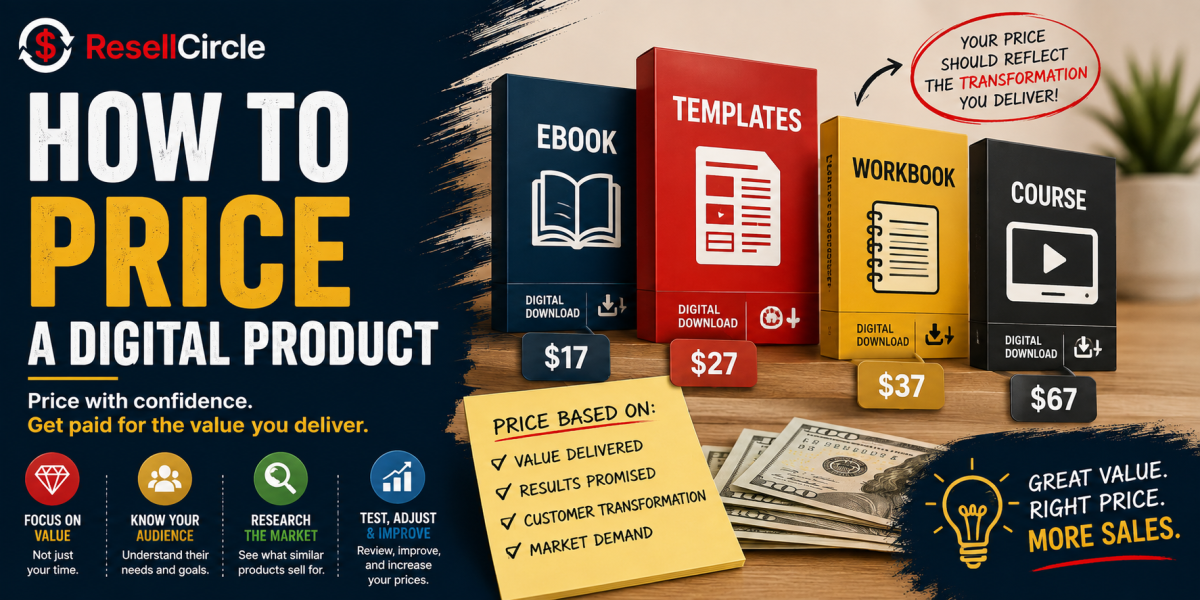
Price with confidence. Get paid for the value you deliver.
One of the biggest questions every creator asks is, "How much should I charge?" It's a fair question, but it's also one of the biggest reasons people delay launching their first product. Some creators charge too little because they're afraid no one will buy. Others charge too much without clearly communicating the value their product provides.
The truth is, pricing isn't about guessing. It's about understanding your audience, the problem you're solving, and the value you're delivering. When you approach pricing with confidence, you position your product as an investment instead of just another expense.
Don't Price Your Product Based on Time
One of the most common mistakes new creators make is pricing their product based on how long it took to create.
Just because you spent 40 hours writing an eBook doesn't automatically make it worth $400. On the other hand, a checklist you created in two hours could easily be worth $49 if it saves someone days of work or helps them avoid an expensive mistake.
Customers aren't paying for the hours you invested. They're paying for the results they'll receive.
Before setting a price, ask yourself:
- What problem does this solve?
- How much time does it save?
- How much money could it help someone make or save?
- How valuable is that outcome to my customer?
The answers to those questions matter far more than the number of hours you spent creating the product.
Know Who You're Selling To
Not every customer has the same budget or expectations. A printable meal planner for busy families will likely be priced differently than a comprehensive business course for entrepreneurs.
Think about who you're serving. Are they beginners looking for an affordable resource, or professionals willing to invest more for advanced knowledge? Understanding your audience helps you choose a price that feels reasonable while still reflecting the value of your product.
Pricing should make sense for both your customer and your business.
Research Similar Products
Before publishing your product, spend a little time looking at what similar products are selling for. This doesn't mean you should copy someone else's pricing, but it does give you a better understanding of the market.
Pay attention to things like:
- What features are included?
- How professionally is the product presented?
- What problem does it solve?
- What price range appears most common?
Research helps you avoid pricing your product far below—or far above—what customers expect.
Don't Undervalue Your Work
Many new creators believe charging less will automatically lead to more sales. Sometimes the opposite is true.
When a product is priced too low, customers often question its quality. They may assume the information isn't valuable or wonder why it's so inexpensive compared to similar products.
Your price sends a message. If you believe your product provides real value, don't be afraid to charge accordingly. People are willing to invest in products that solve meaningful problems and deliver real results.
Offer Different Pricing Options
Not every customer is looking for the same level of value. One way to serve a wider audience is by offering multiple pricing options.
For example, you might offer:
- Basic: An eBook or guide.
- Premium: The eBook plus worksheets and templates.
- Bundle: Everything included, along with bonus resources or additional products.
Giving customers options allows them to choose the package that best fits their needs and budget while increasing your potential revenue.
Review Your Prices as You Grow
Your first price doesn't have to be your forever price.
As you gain experience, improve your products, receive positive reviews, and build a larger audience, it's perfectly reasonable to increase your prices. In fact, many successful creators adjust their pricing over time as the value of their products continues to grow.
Don't be afraid to revisit your pricing every few months and ask yourself whether it still reflects the quality and results your product delivers.
Final Thoughts
Pricing your digital product isn't about choosing the lowest number possible. It's about finding the balance between what your customer receives and the value you provide.
When you understand your audience, focus on solving real problems, research the market, and price with confidence, you'll attract customers who appreciate the transformation your product offers—not just the price tag attached to it.
At Resell Circle, we encourage creators to stop thinking of pricing as a guessing game. Every digital product represents knowledge, experience, and solutions that can improve someone else's life. When your product creates real value, your price should reflect it.
Remember this: People rarely complain about paying for something that genuinely helps them. Focus on creating value first, and pricing becomes much easier.


Comments
3This article offers valuable insights into what pricing can look like and how it is determined.
Great article thank you so much Bishop with the value you're providing.
Great Article